Stones in Every Color to Consider for Your Jewelry
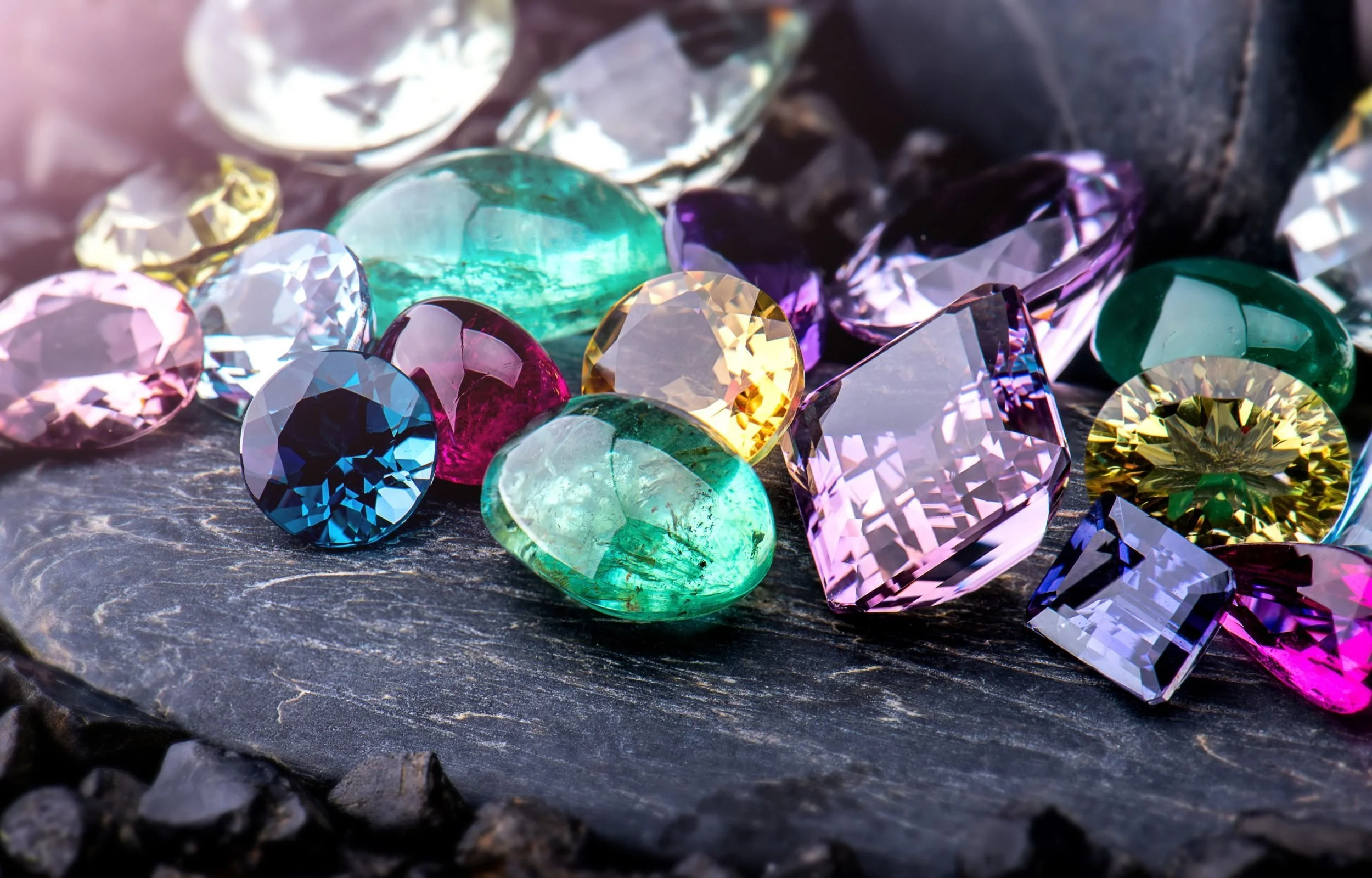
Thinking about adding to your jewelry collection, but not sure which stone you want next? We’re here to introduce you to some popular stones in every color to consider for your jewelry. Think about which shades fit your style and use this guide to get to know the gems behind them
Red
If you want red in your jewelry, you can go bright and vivid or much darker. Ruby brings the classic jewel-toned red most people recognize, while garnet offers deeper shades that edge toward wine and burgundy.
Ruby
Few gemstones are as closely associated with one color as ruby. It’s the red form of corundum, the same mineral that produces sapphire, but chromium gives ruby its signature red.
The best-known rubies have a saturated crimson color that remains vibrant even in smaller stones. Pinker varieties look lighter and a little less dramatic, while darker rubies bring more depth to a ring or pendant.
Garnet
Garnet isn’t one mineral but a family of related minerals. Two red varieties you’ll commonly encounter are almandine, with its darker burgundy cast, and pyrope, which leans closer to crimson.
That darker palette gives garnet a very different character from ruby. It’s a natural option for jewelry with vintage styling or for anyone who prefers red without the brighter finish of a classic ruby.
Orange
Orange jewelry doesn’t have to look loud. Fire opal can bring plenty of brightness, while carnelian settles into burnt orange and rust tones with a smoother finish.
Fire Opal
Fire opal stands apart from the milky white opal many people know. Its body itself is orange, with some stones leaning yellow and others moving toward red-orange.
Transparent specimens may be faceted so light passes through the stone, which intensifies that fiery color. Other pieces are more translucent and have a softer glow. Either way, the orange remains the star rather than serving as a background for flashes of other colors.
Carnelian
Carnelian belongs to the chalcedony branch of the quartz family, and its warm orange color comes from iron oxide within the stone.
You’ll commonly see carnelian shaped into smooth cabochons or beads instead of sharply faceted cuts. That treatment complements its translucent body and lets the burnt-orange color spread across a larger surface. The result has far less sparkle than fire opal but much more earthy warmth.
Yellow
Yellow gemstones can take jewelry toward pale lemon or rich gold. Citrine has the warmth of quartz, while yellow sapphire delivers brighter reflections from a transparent faceted gem.
Citrine
Citrine is yellow quartz, and its color can lean anywhere from light lemon to amber-gold. Natural citrine exists, although much of the material sold today began as amethyst and received heat treatment to change its purple color.
For jewelry, the golden varieties are particularly easy to pair with warm-toned metals. Paler citrine has a lighter look that lets you bring yellow into a piece without making the color dominate the entire design.
Yellow Sapphire
Yellow sapphire comes from the corundum family, alongside ruby and blue sapphire. Its yellow appearance develops from trace elements within the crystal.
Because the stone is transparent, jewelers can facet it to bring out plenty of brilliance. Lemon-yellow stones have a bright finish, while deeper golden sapphires make a richer centerpiece.
Green
Green gives you two very different directions here. Emerald is known for dense jewel tones, while peridot has a bright yellow-green cast that’s hard to mistake for anything else.
Emerald
Emerald is a type of beryl prized for its saturated green. Chromium or vanadium contributes to that coloration, with many stones carrying a slight blue undertone.
Natural emeralds also commonly contain inclusions, which may appear as tiny internal fractures or mineral traces. Rather than making every stone look identical, those features give individual emeralds their own internal texture beneath that deep green surface.
Peridot
Peridot is the gem form of olivine, and green is the only color in which it occurs. The iron already present in the mineral gives it that signature yellow-green appearance.
That hint of yellow is what separates peridot so quickly from emerald. In jewelry, it can look almost lime-toned under bright light, giving you a much lighter take on green.
Blue
Blue gemstones can give jewelry anything from a deep, dramatic tone to a brighter pop of color. Sapphire keeps things rich and faceted, while turquoise brings in a softer opaque blue with more surface character.
Sapphire
Blue sapphire is corundum colored by trace amounts of iron and titanium. Its best-known shades sit between medium blue and deep navy, although much lighter stones also occur.
Faceting brings out flashes of lighter blue as the stone catches the light, so a sapphire rarely looks like one flat color from every angle. Darker examples create an inky centerpiece, while medium blues give you the classic sapphire appearance.
Turquoise
Turquoise is completely opaque, so its appeal comes from surface color rather than light passing through the stone. Copper gives it the blue most people associate with turquoise, and additional minerals can pull that color toward green.
Some pieces also contain matrix, the dark veining left by the rock in which the turquoise formed. That natural variation is part of its visual identity in jewelry.
Be careful when purchasing turquoise jewelry if you want an authentic stone. Dyed howlite is naturally white, but its dark veining can resemble turquoise after coloring.
Pink
Pink can be barely there or impossible to miss. Rose quartz gives jewelry a cloudy blush, while pink tourmaline brings much stronger saturation and a transparent finish.
Rose Quartz
Rose quartz gets its soft color from microscopic inclusions within the quartz. Those same tiny inclusions contribute to the hazy appearance that separates it from transparent pink gems.
Rather than cutting it for intense sparkle, jewelers frequently shape rose quartz into smooth beads or cabochons. Those larger uninterrupted surfaces let the blush color take center stage and preserve the stone’s cloudy character.
Pink Tourmaline
Pink tourmaline can move far beyond pastel territory. Some stones are pale and delicate, while others push toward raspberry or vivid magenta.
Many specimens are transparent enough for faceting, which gives pink tourmaline flashes of light throughout the color. A deeper stone can carry an entire ring or pendant on its own without needing a large setting or extra decoration.
Purple
Purple jewelry can stay light with lavender tones or move into saturated violet. Amethyst gives you the classic quartz option, while purple sapphire has a brighter faceted appearance.
Amethyst
Amethyst is purple quartz, with its violet color developing through iron in the crystal and natural irradiation. Individual stones may lean lavender, true violet, or slightly reddish purple.
Its transparency allows for faceted cuts, but the color still does most of the visual work. Pale amethyst has an airy lavender appearance, while deeper violet stones bring much more drama without leaving the same gemstone family.
Purple Sapphire
Purple sapphire belongs to the corundum family rather than quartz, even though some shades can resemble amethyst at first glance. The stone may appear lavender, violet, or somewhere closer to pink-purple.
Its brighter reflections separate it visually from many amethysts. In a faceted setting, purple sapphire gives you crisp flashes through the stone instead of the softer violet appearance associated with quartz.
Find the Color That Fits
Your next piece can start with something as simple as a color you love. With so many stones in every color to consider for your jewelry, you can find a gem that brings the exact shade you want into your collection.