When The Paycheck Changes Every Month: A Self-Employed Family Finance Guide
Self-employment can give families greater control over their schedules and earning potential, but it also changes how household finances need to be managed. Income may fluctuate from month to month, taxes are rarely withheld automatically, and benefits that employers commonly provide become the family’s responsibility. A financial plan built around these differences can make irregular income easier to manage without allowing one slow month to disrupt essential household expenses.

Photo by Mieke Campbell on Unsplash
Build the Budget Around Reliable Income
A family earning a fixed salary can usually predict how much money will arrive each pay period. Self-employed households may have a strong quarter followed by several slower months.
Instead of building a budget around the best months, look at income over the previous year and identify a conservative monthly baseline. Essential expenses such as housing, utilities, groceries, and minimum debt payments should ideally fit within that amount. Higher-income months can then serve another purpose. The additional money might replenish savings or fund expenses that can be postponed during slower periods.
Keeping business and household accounts separate also makes this process easier. Paying yourself a regular transfer from the business account can create greater consistency even when business revenue varies.
Treat Taxes Like a Recurring Bill
Self-employed workers generally need to plan for federal income taxes and self-employment taxes themselves. Depending on their situation, they may also have state and local obligations. Waiting until tax season to find the money can put significant pressure on the household budget. Setting aside part of business income as it arrives creates a dedicated pool for tax payments.
Give the Emergency Fund More Room
Emergency savings are particularly important when household income depends heavily on self-employment. A traditional emergency such as a major home repair can occur at the same time as a business slowdown. The appropriate savings target depends on the family’s expenses, income stability, and whether another household member earns a predictable salary. Someone with recurring client contracts may face less income volatility than a freelancer whose projects change every month.
Replace Benefits an Employer Would Have Provided
Leaving traditional employment can mean losing access to employer-sponsored health coverage, retirement contributions, disability benefits, and life insurance. These expenses need to become part of the household plan rather than afterthoughts. Insurance decisions should reflect the family’s financial exposure. Families researching coverage may encounter everything from term policies to whole life insurance quotes online. Price is only one consideration.
Keep Retirement From Becoming Optional
Without an employer automatically enrolling workers in a retirement plan, saving can easily be postponed during busy or expensive periods. Self-employed workers have several potential retirement account options, depending on their business structure and whether they have employees. Percentage-based contributions can work well with irregular income. Strong months generate larger contributions, while slower periods require less cash.
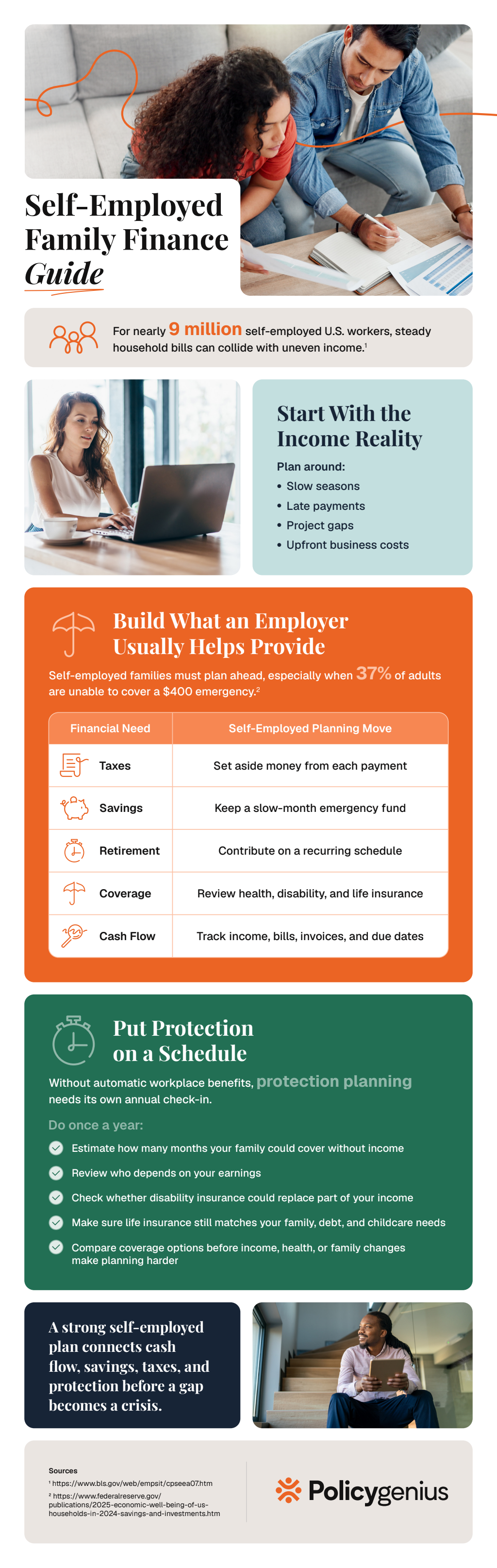
Self-employed family finances work best when variability is expected rather than treated as an exception. A conservative household budget, dedicated tax funds, separate emergency reserves, appropriate insurance, and regular retirement contributions can create stability even when business income changes. Check out the infographic below for more information.