Eating Like A Local: A Food Lover’s Guide To Regional Cuisine
Food can reveal as much about a destination as its museums, landmarks, or architecture. Regional dishes reflect local agriculture, migration, climate, trade, and family traditions that may stretch back generations. For travelers who plan trips around meals, the challenge is getting beyond familiar tourist menus without making dining unnecessarily complicated. A little research and observation can lead to meals that offer a much closer look at the place you are visiting.
Research Dishes Before Restaurants
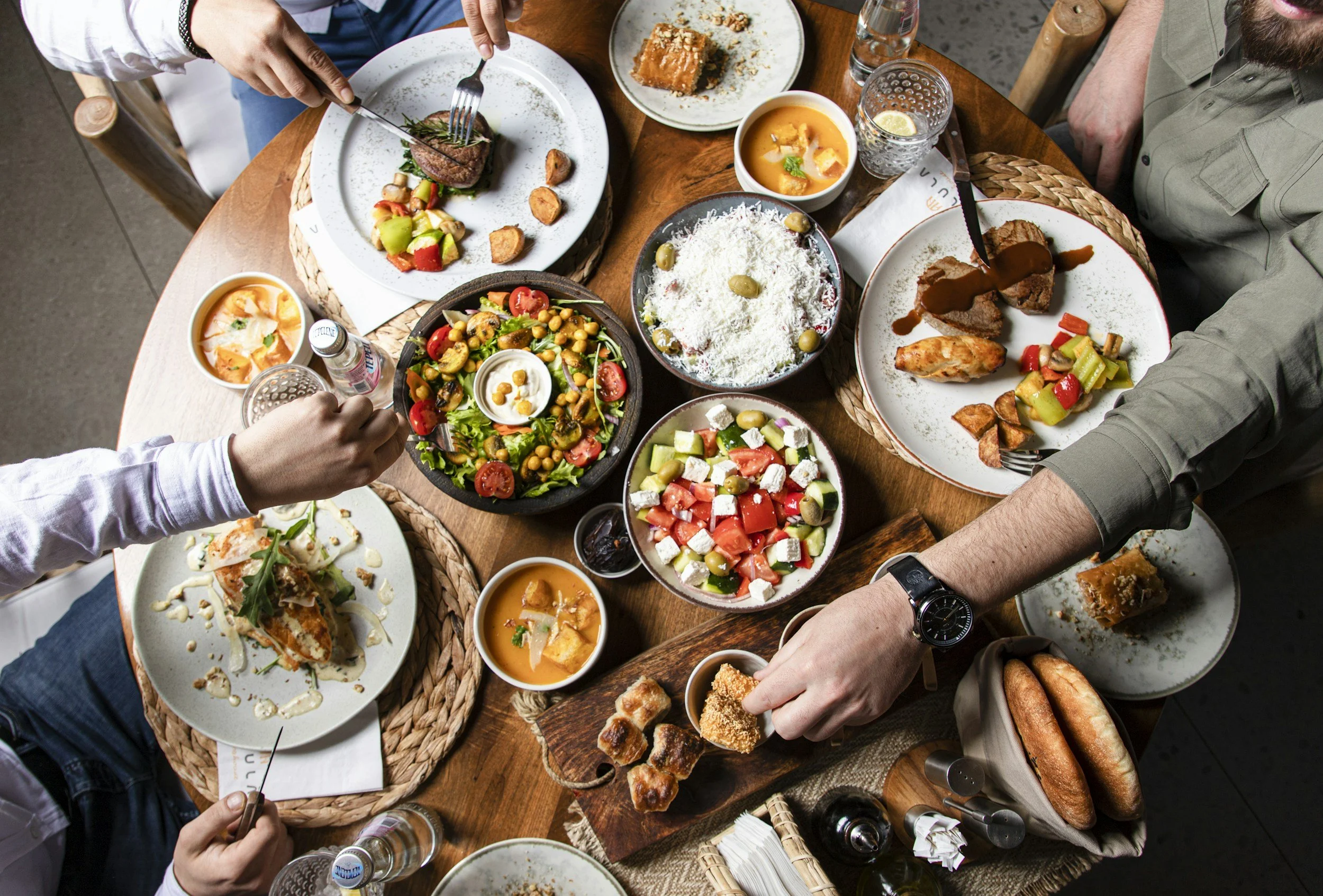
Instead of beginning with lists of highly rated restaurants, learn which foods are associated with the destination. Knowing a few regional specialties gives you something specific to look for once you arrive.
Research ingredients as well. Coastal areas may have seafood dishes built around the daily catch, while agricultural regions may feature local cheeses, grains, meats, or produce. Some specialties also change by season, so a dish recommended in a travel guide may not be widely available during your visit. Knowing basic food terminology in the local language can make menus easier to interpret.
Look Beyond the Tourist District
Restaurants beside major attractions serve a purpose, but they do not always provide the best picture of everyday local dining. Walk a few blocks away from heavily visited areas and see where residents are eating.
Markets are especially useful. Food halls, produce markets, bakeries, neighborhood cafes, and street stalls can show which ingredients and dishes people actually buy. A morning market visit can also reveal foods that rarely appear on formal restaurant menus. Crowds alone are not proof of quality, but steady local traffic is worth noticing.
Learn the Local Dining Rhythm
Meal schedules differ significantly between destinations. Dinner that begins at 6 p.m. in one country may feel unusually early somewhere else. Restaurants might close between lunch and dinner, while certain foods may traditionally be eaten only at particular times.
Learning these patterns can prevent travelers from arriving at a restaurant when the kitchen is closed or ordering a specialty at a time when it is rarely served.
Dining customs matter too. Tipping practices, shared plates, table service, ordering procedures, and expectations about how long guests occupy a table can vary.
Balance Curiosity With Food Safety
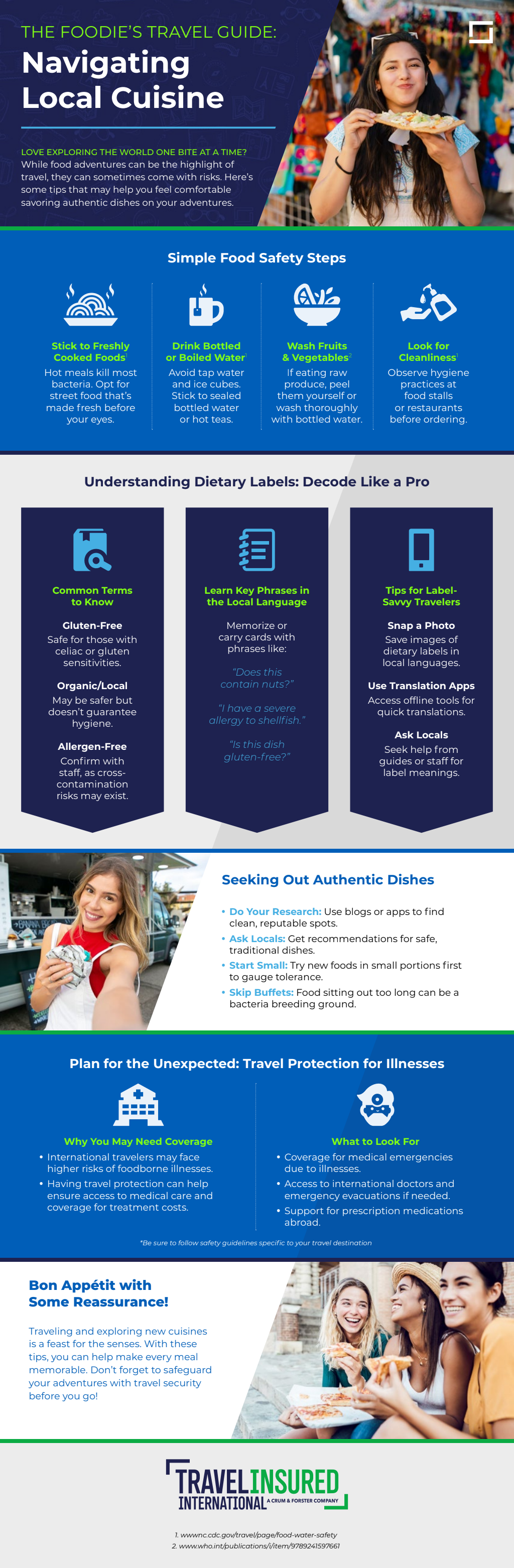
Trying unfamiliar food is part of the experience, but travelers should still use basic precautions. Pay attention to food temperature, hygiene, water quality, and how ingredients are stored, particularly when eating from temporary stalls.
Travelers with allergies or dietary restrictions should learn how to communicate those needs clearly in the local language. Carrying a translated allergy card can help when verbal communication is difficult.
It is also worth reviewing what your health coverage provides abroad. Depending on the trip and policy, international travel insurance may provide coverage or assistance for certain medical situations overseas.
Exploring local cuisine does not require eating at the most famous restaurant in every city. Learn the regional dishes, observe where residents eat, respect local dining customs, and stay sensible about food safety. To learn more about navigating local cuisine, look over the accompanying infographic below.