Bringing Nature Indoors: Biophilic Touchpoints Throughout The Home
A home does not need to resemble a greenhouse to feel connected to nature. Biophilic interior design uses smaller cues such as daylight, plants, natural materials, outdoor views, and organic shapes to strengthen that connection. Rather than concentrating these features in one room, homeowners can create touchpoints throughout the interior.
Start With Natural Light
Daylight is one of the most practical biophilic elements because it changes throughout the day. Instead of blocking windows with heavy furniture or dark coverings, arrange rooms so frequently used spaces benefit from available sunlight.
Mirrors can help reflect light deeper into a room, while lighter wall finishes can prevent darker areas from feeling closed in. Window treatments also matter. Layered shades or curtains give homeowners control over privacy and glare without eliminating daylight completely.
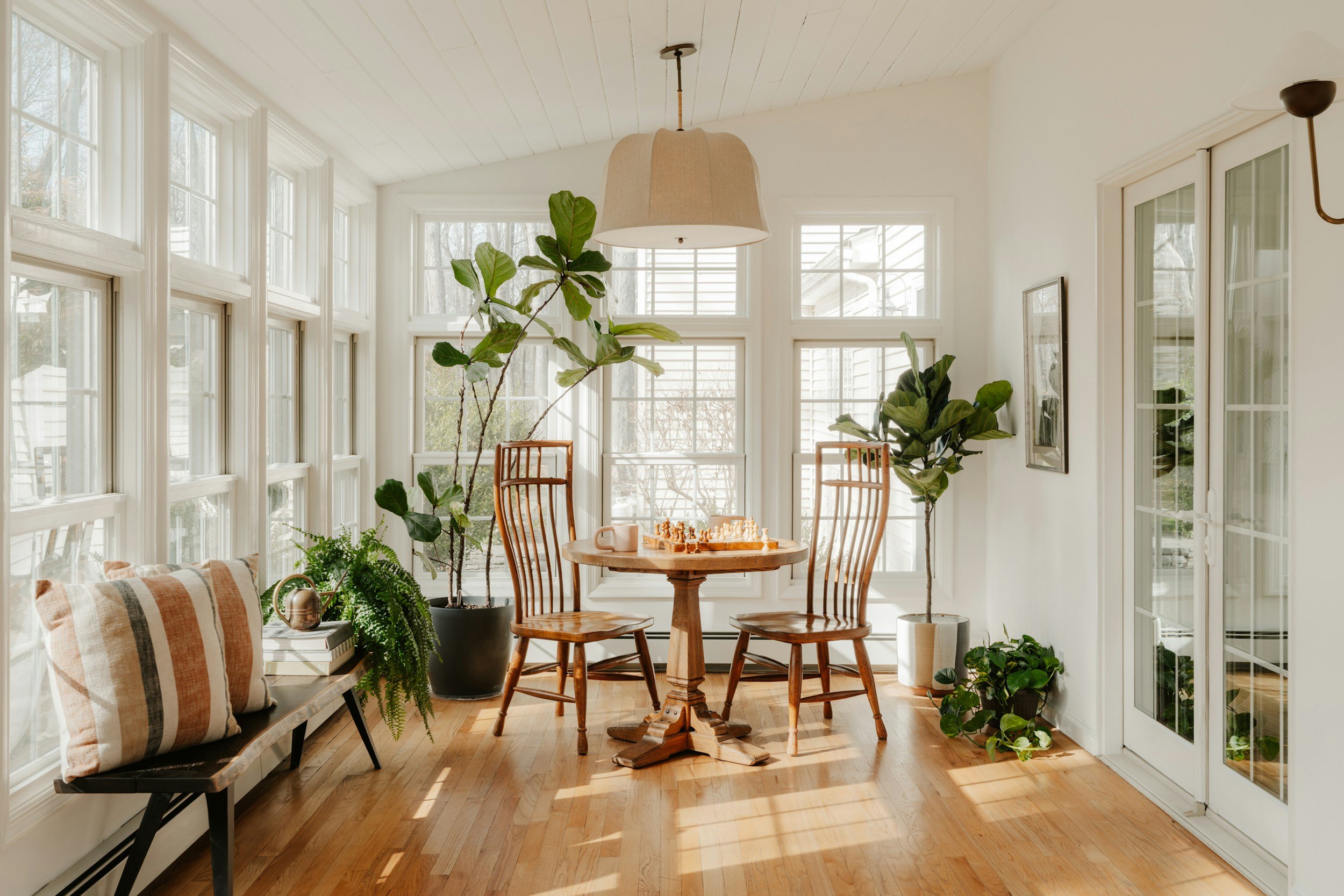
Views deserve similar consideration. A chair facing a backyard or a desk positioned near a window creates a direct visual connection with the outdoors.
Use Plants Where Daily Life Happens
Plants are an obvious biophilic feature, but placement matters more than quantity. A few healthy plants positioned where people regularly spend time can have greater visual impact than a large collection crowded into one corner.
Match plants to actual room conditions. A sunny kitchen window may support herbs, while a darker hallway requires species that tolerate lower light. Bathrooms with sufficient daylight may support plants that prefer higher humidity. Artificial plants can provide color and shape, but they don't offer the same living connection as real greenery.
Bring Natural Materials Into Everyday Surfaces
Biophilic design can extend beyond plants. Wood, stone, cork, clay, linen, wool, and other materials associated with nature can appear in furniture, floors, countertops, textiles, or decorative objects.
These materials work especially well in places people touch frequently. A wooden dining table, woven rug, stone countertop, or linen curtain adds texture without requiring a dramatic renovation.
This approach is increasingly visible in new home communities, where buyers may encounter layouts that emphasize larger windows, outdoor living areas, natural finishes, and stronger connections between interior and exterior spaces.
Borrow Shapes and Colors From Nature
Natural environments rarely consist entirely of straight lines and perfect symmetry. Curved furniture, rounded lighting fixtures, botanical patterns, and irregular decorative pieces can soften interiors dominated by rectangular walls and cabinetry.
Color can contribute as well. Greens, earth tones, muted blues, and warm neutrals can reference landscapes without turning a room into a literal nature theme. The goal is restraint. Too many competing textures, patterns, and colors can make a room feel visually busy.
Connect Indoor and Outdoor Spaces
Doors, patios, balconies, porches, and windows can create transitions between indoor and outdoor living. Even without major construction, similar flooring tones, plants near entrances, or coordinated furniture materials can strengthen the visual relationship between the two spaces.
Biophilic design works best as a series of small connections rather than one decorative statement. Daylight in a workspace, herbs in the kitchen, natural fibers in a bedroom, and an outdoor view from a favorite chair can each contribute something different. Look over the infographic below for more information.
