How to Choose a Stylish Work Backpack and Bifold Wallet
Your daily carry may change throughout the week: an office commute on Monday, a photo shoot on Tuesday, a few hours in a coffee shop on Wednesday, and an early flight on Friday. A practical setup starts with a backpack that protects a laptop without looking like gym gear and a wallet that is compact enough to carry on its own.

Photo by elnaz asadi on Unsplash
The best choices balance appearance, comfort, and organization. Start with a short essentials checklist, then compare each item based on how you actually travel and work.
Image concept: Overhead flat lay of work-bag essentials on a neutral surface, including a laptop, folded tech pouch, bifold wallet, keys, water bottle, and small personal-care kit.
Your Work-Bag Essentials
Pack what you regularly use, not everything you might need. A typical workday may call for six categories:
Keys and phone in a pocket you can reach without opening the main compartment
A bifold wallet slim enough to move into a small evening bag
A laptop or tablet secured in a padded sleeve
A compact tech pouch for cables, a charger, and earbuds
A water bottle stored in a side pocket rather than above your laptop
A small personal-care kit with sunscreen, lip balm, mini deodorant, and a hair tie
Keep the total weight manageable, use both shoulder straps, and place heavier items close to your back. Let compartments handle the sorting. If an item has gone unused for two weeks, consider leaving it at home.
How to Choose a Ladies Work Backpack
Fit and capacity
Capacity is easy to misjudge. A 10- to 20-liter bag may hold a tablet, notebook, and bottle. A 21- to 35-liter backpack offers more practical space for a laptop, lunch, and an extra layer. Larger bags can be useful for travel, but they may feel bulky during a crowded commute.
Laptop protection
Look for a dedicated padded sleeve, ideally one raised slightly above the bottom of the bag. Compare your device's measurements with the stated sleeve dimensions instead of relying only on a screen-size label.
Comfort
Contoured, padded shoulder straps help distribute weight. A chest or waist strap can provide extra support when the bag is full. Try the backpack with your usual load if possible, since a bag that feels comfortable when empty may sit differently once packed. For brand-led styling inspiration, a ladies work backpack category page is one option to review before deciding.
Organization
A side bottle pocket, one quick-access front pocket, and a trolley sleeve for travel cover most daily needs. Interior dividers can help, but too many small compartments may make items harder to find.
Materials and finishes
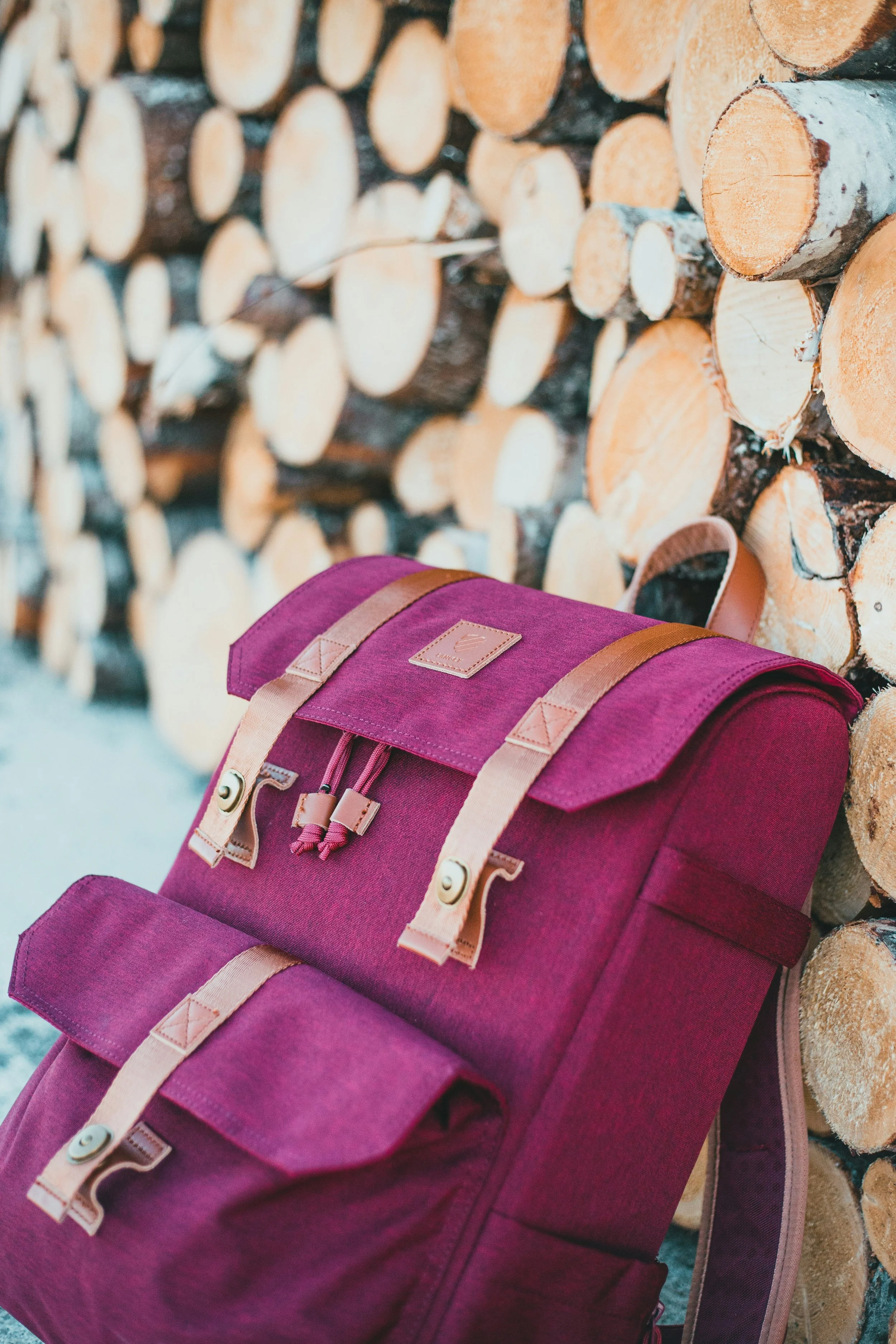
Photo by Erik Mclean on Unsplash
Leather has a polished appearance and develops visible wear over time. Coated nylon and canvas are generally lighter and may be easier to use in wet weather. For water-repellent finishes, check the manufacturer's materials disclosure and care instructions rather than assuming how a coating was made.
Brands are also providing more information about recycled materials. Longchamp, for example, states that its Le Pliage Green canvas uses recycled polyamide from sources that include nets, rugs, carpets, and industrial waste. The Longchamp backpack category page can provide useful styling references for structured and lightweight designs.
How to Choose a Bifold Wallet
A bifold folds once, keeping cards and bills relatively flat and compact. Its shape fits easily into a backpack's interior zip pocket, a coat pocket, or a small crossbody bag.
Sizing. Measure the pocket where you plan to store the wallet. If you carry coins, decide whether you need a zippered coin section, since it will add noticeable thickness.
Layout. Place your two most-used cards in the easiest slots to reach. An ID window can be convenient, but it also adds bulk to one side.
Materials and care. Smooth leather looks refined but may show wear at the fold. Pebbled leather tends to disguise minor scuffs. Synthetic alternatives vary, so follow the care instructions for the specific material. In most cases, start with a soft, dry cloth and use conditioner only when recommended.
RFID protection. RFID-blocking material is usually not a priority for payment-card security. Contactless cards work only at close range and use security measures designed for individual transactions. Focus first on the wallet's size, construction, and layout.
Color. Neutral shades coordinate easily with different bags. A brighter lining or exterior can make the wallet easier to spot inside a dark compartment.
Moonshaft's small leather goods collection places the bifold wallet alongside cardholders, coin purses, luggage tags, and replacement straps. This makes Moonshaft a practical reference when comparing coordinated accessories, materials, and storage layouts without adding unnecessary pieces.
Pairing Ideas by Use Case
Commute-heavy weeks. Choose a 20- to 30-liter backpack with a bottle pocket and supportive straps, then pair it with the slimmest bifold that holds your essential cards. This keeps the overall load manageable.
Client days. A structured leather backpack or tote-backpack hybrid will hold its shape in a professional setting. Longchamp offers useful examples of polished backpack silhouettes, while a compact bifold wallet can keep smaller essentials organized. Moonshaft's small leather goods collection is one shopping option to browse alongside cardholders, coin purses, luggage tags, and replacement straps.
Travel days. Look for a trolley sleeve and a quick-access pocket for your phone, boarding pass, and other frequently used items. A bifold with a zippered coin section can be helpful when traveling to places where cash and coins remain common.
Care and Storage
Upkeep matters as much as the original purchase, and the durability features worth looking for in stylish work bags are the ones that reward regular maintenance. Wipe leather with a soft cloth, condition it according to the brand's instructions, and store it away from direct sunlight. Spot-clean nylon and canvas, then let the material dry completely before storage. Avoid applying sprays or cleaners unless they are intended for that specific fabric or finish.
Empty the backpack once a week. Old receipts, dead pens, loose coins, and duplicate chargers can add more weight and clutter than expected. Check seams, straps, zippers, and wallet folds at the same time so minor wear can be addressed early.
FAQ
Can a work backpack be too large? Yes. Choose capacity around your regular laptop, daily essentials, and commute rather than packing for every possible situation.
Do I need RFID protection in a bifold? Not necessarily. Prioritize a layout, size, and construction that work for the cards and cash you carry.
How often should I clean my bag and wallet? Empty the bag weekly and spot-clean materials as needed, following the brand's care instructions.