How To Coordinate Jewelry With Your Outfit
Jewelry can transform an outfit by adding polish, personality, and visual interest. The right pieces can make casual clothing feel intentional or help formal attire look complete without overwhelming the overall style. Learning how to coordinate jewelry with your outfit comes down to creating balance between your clothing and accessories. You do not need every piece to match perfectly. Instead, consider how color, neckline, scale, and occasion influence the way jewelry works with what you wear. A thoughtful approach helps each accessory complement your clothing while still giving you room to express your individual taste.
Start With the Outfit
Choose your clothing before deciding which jewelry to wear. Your outfit establishes the overall direction, making it easier to select accessories that support the look instead of competing with it. A tailored dress may call for refined pieces, while a relaxed sweater can pair naturally with more casual jewelry.
Pay attention to the details that already create visual interest. Bold prints or elaborate embellishments often need less jewelry because the clothing already commands attention. Simple garments give you more freedom to introduce statement pieces. Consider whether you want the jewelry or clothing to serve as the focus, then build the rest of the look around that choice.
Consider Your Neckline
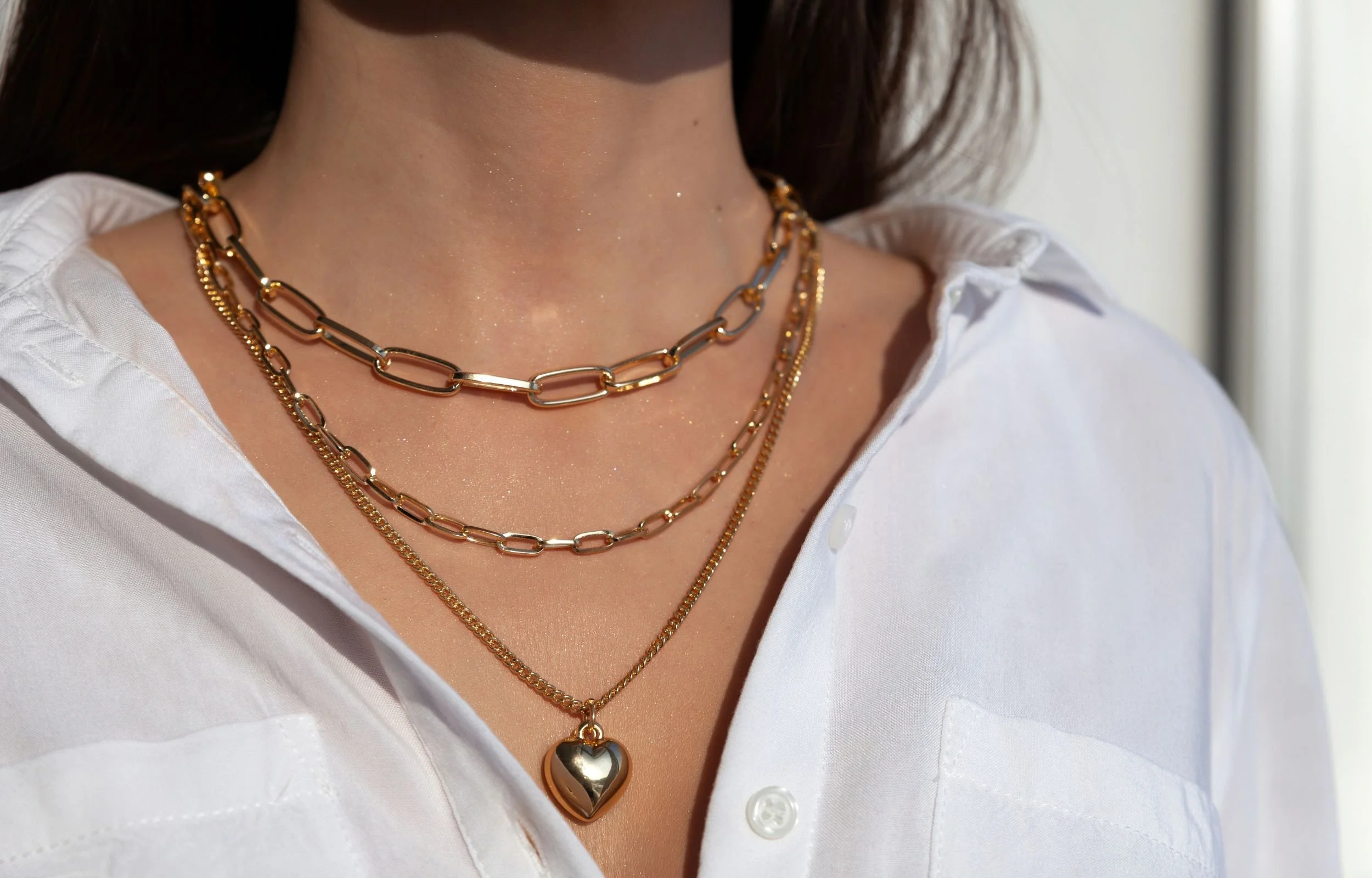
Necklines influence which necklaces look most natural with an outfit. A necklace should work with the open space around your neck rather than interrupting the lines created by your clothing. For example, a shorter necklace can sit neatly above a crew neckline, while a longer pendant can complement a deeper neckline.
You can also skip a necklace when the neckline already includes decorative details. In that case, earrings can add interest without crowding the upper part of your outfit. High necklines often pair well with noticeable earrings because they shift attention toward the face. Let the shape of your clothing guide your jewelry placement so the finished look feels intentional.
Match Jewelry to the Occasion
The setting should influence how much jewelry you wear and how dramatic each piece appears. Everyday outfits usually work well with comfortable accessories that will not interfere with your routine. Small hoops, simple chains, or understated rings can add polish while remaining practical throughout the day.
Special occasions give you more freedom to choose jewelry with stronger visual impact. A formal dress can support sparkling earrings or an elegant bracelet, depending on its design. Professional settings often benefit from restrained pieces that complement your clothing without distracting from your overall appearance. Choosing jewelry with the occasion in mind helps your accessories feel appropriate rather than disconnected from the moment.
Use Color With Intention
Jewelry can reinforce colors in your outfit or provide a controlled contrast. Neutral clothing creates an easy backdrop for colorful gemstones because the jewelry can stand out without competing with strong patterns. Bright clothing may look more balanced with simple metals or stones in quieter shades.
You do not need to match a gemstone exactly to your shirt or dress. Slight differences in tone can create depth and prevent the outfit from looking overly coordinated. You can also use jewelry to repeat a small accent color from a print. This connection creates cohesion while allowing the accessory to maintain its own character. Focus on harmony rather than an exact color match.
Balance the Scale of Your Accessories
The size of your jewelry affects the visual weight of an outfit. Large earrings can become the focal point near your face, so pairing them with a subtle necklace can keep the upper half of your look from feeling crowded. Likewise, a substantial necklace may look best with smaller earrings.
Clothing proportions matter as well. Delicate jewelry can complement lightweight fabrics or streamlined silhouettes, while bolder pieces can hold their own against heavier materials. However, contrast can also work when you use it deliberately. A fine chain against a structured blazer can soften the outfit without disappearing. Look at your complete silhouette and adjust accessory size until the proportions feel balanced.
Coordinate Metals Without Overmatching
Matching every metal once served as a common styling rule, but modern outfits allow much more flexibility. Gold, silver, and other finishes can work together when you create a visible connection between them. A piece that already combines multiple metals can make the rest of your choices feel especially cohesive.
When wearing different metals, repeat one finish somewhere else in the look. For example, silver earrings can connect with a mixed-metal bracelet that also contains gold. This approach makes the combination appear deliberate. You can also consider hardware on handbags, belts, or shoes when coordinating jewelry. Those small details contribute to the overall look, even though they do not need to match every accessory exactly.
Combine Different Jewelry Styles Thoughtfully
Avoid wearing several highly detailed pieces in the same area. An ornate vintage-inspired necklace may need simple earrings to maintain balance. Conversely, a sleek necklace can give decorative earrings more room to stand out. Mixing vintage-inspired and modern jewelry designs works best when each piece has a clear role rather than competing for attention. The result should look collected and intentional instead of accidental.
Let One Statement Piece Lead
A statement piece can simplify your jewelry decisions because it gives the outfit a clear focal point. Start with the accessory you want people to notice, then choose quieter pieces to support it. A dramatic necklace, for instance, may only need understated earrings nearby.
Statement jewelry works particularly well with clothing that provides enough visual space for the piece to stand out. Solid colors and uncomplicated silhouettes often create an effective background. If your clothing already features strong patterns, choose statement jewelry carefully so the two elements do not compete. Giving one feature visual priority creates a cleaner, more confident appearance.
Pay Attention To Personal Style
Coordination rules can provide direction, but your preferences should ultimately shape your choices. Jewelry often carries emotional meaning or reflects personal taste, so an accessory does not need to follow every conventional styling guideline. A favorite ring can remain part of your daily look even when other pieces change.
Create a Cohesive Look With Confidence
Understanding how to coordinate jewelry with your outfit makes accessorizing easier without turning it into a rigid formula. Start with your clothing, consider the occasion, and choose jewelry that creates the level of emphasis you want. Pay attention to proportion and color while leaving room for personal expression. When each piece supports the overall look, your jewelry can enhance your outfit instead of competing with it. With practice, you can make confident accessory choices that feel polished, comfortable, natural, and true to your style.